
The Problem With Most Branded Gifts (And What to Do Instead)
There’s a very specific moment that happens with most branded gifts.
You open the box.
You see the logo.
You smile politely.
…and then you quietly wonder where you’re going to put it (or how long before it disappears into a drawer).
Let’s just say it:
Most branded gifts aren’t memorable. They’re obligation gifts.
And the tricky part? They’re usually given with good intentions.
Where Branded Gifting Goes Wrong
The goal of gifting is simple:
Make someone feel appreciated, remembered, maybe even a little delighted.
But somewhere along the way, gifting turned into advertising.
Instead of asking “Would they actually enjoy this?”
The question became “Where can we put our logo?”
That’s how you end up with:
another generic tumbler
a tote bag that never leaves the closet
something technically “nice”… but completely forgettable
It’s not that branding is bad. It’s that forced branding misses the point.
Not Everything Needs a Logo
Here’s a thought:
Your gift doesn’t have to scream your brand to reflect your brand.
In fact, the opposite is usually more powerful.
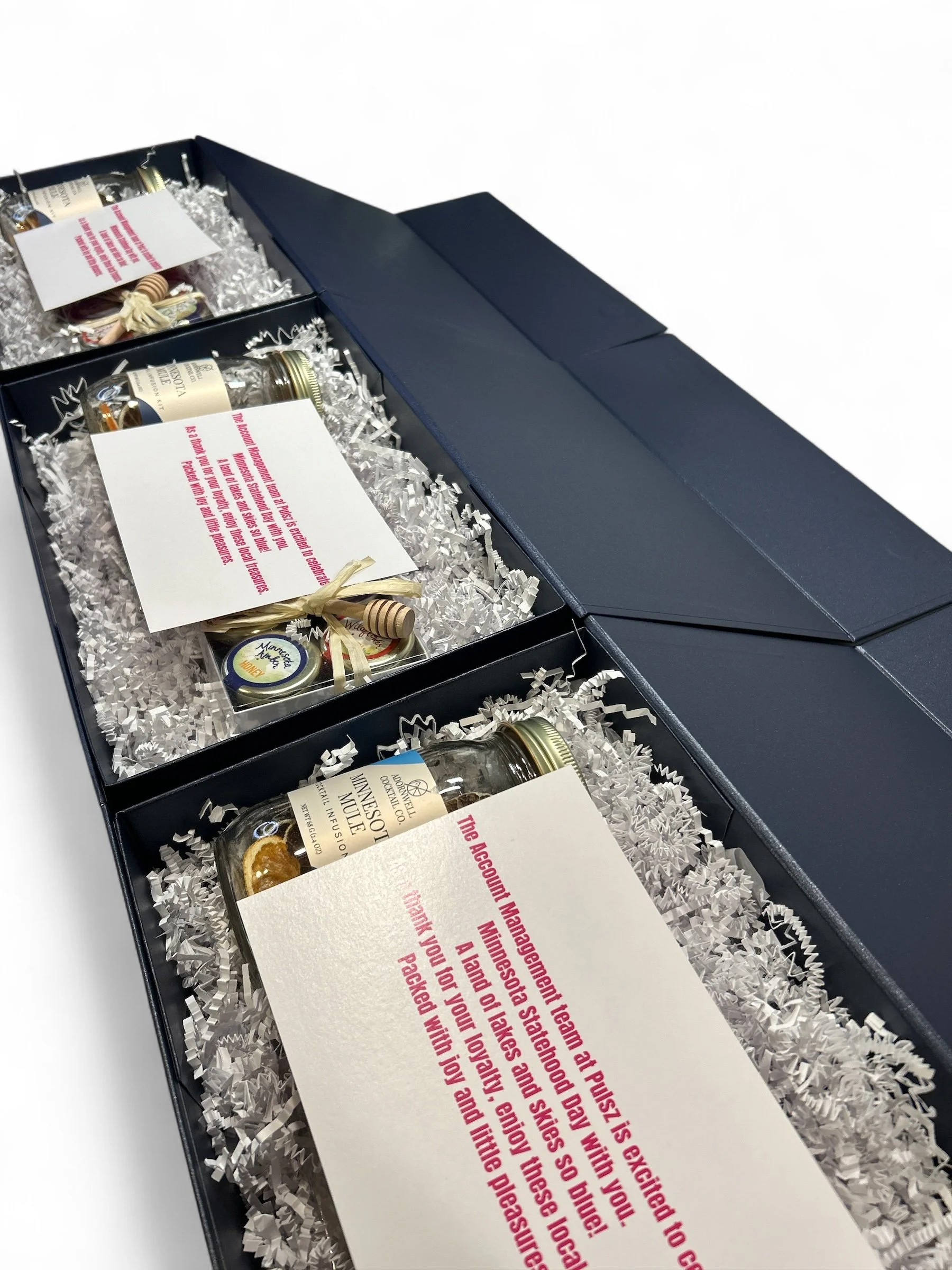
A beautifully curated gift—one that feels cohesive, elevated, and thoughtful—does more for your brand than a logo ever could.
Because people remember how something made them feel far longer than they remember where the logo was placed.
The Shift: From Promotional to Personal
The best gifts don’t feel like marketing.
They feel like someone actually thought about the recipient.
That doesn’t mean you need to customize every item with names or initials. It just means the gift should make sense for them.
A few examples:
A wellness-focused team? Think calming, functional, and elevated (not neon-branded protein shakers).
Hosting a destination wedding? Let the gift reflect the place, not just the couple’s monogram.
Client appreciation? Lean into quality and usefulness over quantity.
It’s less about customization… and more about alignment.
Subtle Branding > Loud Branding
If branding does matter (and sometimes it absolutely does), the key is restraint.
Think:
a custom card with thoughtful messaging
a small, well-placed logo
packaging that feels on-brand without being overwhelming
The goal isn’t to advertise.
It’s to reinforce the experience.
When done right, branding becomes part of the story—not the headline.
The Real Question to Ask
Before sending your next gift, ask this:
If we removed the logo, would this still feel like a great gift?
If the answer is no, it’s worth rethinking.
Because the best gifts don’t rely on branding to make an impression.
They stand on their own.
What Actually Works
The gifts people remember tend to have a few things in common:
they’re useful (something they’ll actually use)
they feel a little indulgent (something they wouldn’t buy for themselves)
they fit into their life (not random, not one-size-fits-all)
And yes—packaging matters. A lot.
The unboxing experience is half the story.
The Bottom Line
You don’t need louder branding.
You need better gifting.
When a gift feels intentional, cohesive, and genuinely enjoyable, it reflects your brand in a way that’s effortless—and far more memorable.
Because at the end of the day, the goal isn’t just to be seen.
It’s to be remembered.
Where We Come In
This is exactly the lens we use at Prezzie.
We’re not here to slap your logo on a box and call it a day. We design gifts that feel considered—from the items inside to the way they’re packaged to how they show up at someone’s door.
Sometimes that includes branding. Sometimes it doesn’t.
Either way, the goal is the same: create something that actually lands.
So if you’ve been side-eyeing your current gifting strategy (or quietly dreading your next bulk order), we should probably talk.
We’ll make sure it’s the kind of gift people actually want to keep.
